Smart Pet Feeding Schedule Guide
Smart Pet Feeding Schedule Guide
Quick Answer
Creating a smart pet feeding schedule means figuring out the right portions based on your pet’s age, weight, and activity level. Automated feeders help you stay consistent, and regular feeding times create routines that make life easier for everyone.
Understanding Your Pet’s Nutritional Needs
Assessing Age and Weight
Start with your pet’s age and weight—this tells you almost everything. Puppies and kittens eat like teenagers, needing frequent meals to fuel their growth. Here’s the sobering reality: about 60% of U.S. pets are overweight or obese, according to the Association for Pet Obesity Prevention. A proper feeding schedule is your first line of defense.
- Puppies (8 weeks to 6 months): Feed three to four times a day
- Adults (6 months to 7 years): Feed twice a day
- Seniors (7 years and older): Once to twice daily, depending on health
Determining Portion Sizes
Most pet food bags have feeding guidelines based on weight, though they’re usually generous (companies want to sell more food). A 10-pound dog typically needs 1 to 1.5 cups daily, while a 5-pound cat requires about 1/4 to 1/3 cup. Portions that small are exactly where cheap machines struggle, so growing cats do better on one of the feeders built for kitten-sized meals.
Caloric Needs
Here’s the math that actually works:
- Dogs: (Weight in pounds x 30) + 70 = Daily calories
- Cats: (Weight in pounds x 20) + 70 = Daily calories
So that 20-pound dog needs roughly 670 calories per day (70 + 600).
Choosing the Right Feeding Method
Manual Feeding vs. Automated Feeders
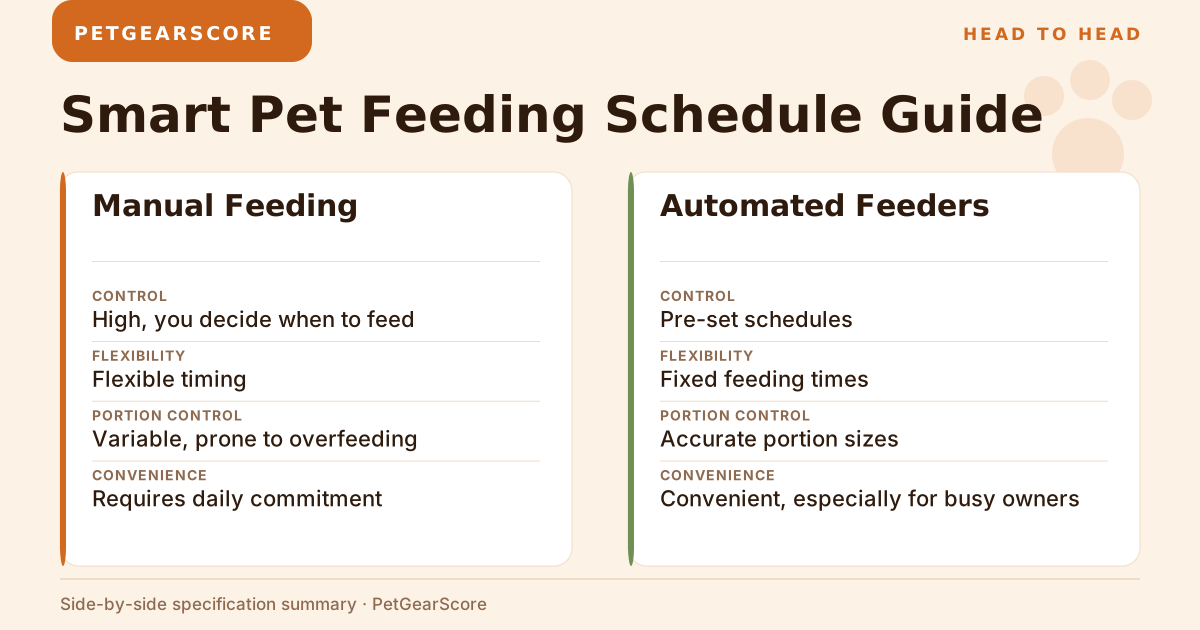
Your choice depends on your schedule and your pet’s eating habits. If you lean automated, a Wi-Fi model like the one in our Petlibro Granary review will stick to the schedule far more consistently than you will on a busy week.
| Feature | Manual Feeding | Automated Feeders |
|---|---|---|
| Control | High, you decide when to feed | Pre-set schedules |
| Flexibility | Flexible timing | Fixed feeding times |
| Portion Control | Variable, prone to overfeeding | Accurate portion sizes |
| Convenience | Requires daily commitment | Convenient, especially for busy owners |
| Cost | Low to moderate | Higher initial investment |
Automated Feeder Recommendations
-
PetSafe Healthy Pet Gravity Feeder
- Price tier: Budget
- Capacity: Holds up to 4 lbs of dry food (medium size)
- Pros: Adjustable portions, easy cleanup
- Cons: Dry food only
-
- Price tier: Budget
- Capacity: 4L food container (up to 17 cups)
- Features: Programmable times, voice recording
- Pros: Customizable portions, works for cats and dogs
- Cons: Needs power source
The WOPET gives you more control, but the PetSafe is perfectly fine for simple needs and costs half as much. Neither is built for canned food, so if your pet eats wet, read up on whether automatic feeders can handle wet food before you buy anything.
Creating a Consistent Feeding Schedule
Establishing Routine
Pets are creatures of habit—use this to your advantage. Feed at the same times daily to regulate their digestive system and make house training easier.
Sample Schedule:
- Morning: 7:00 AM
- Afternoon: 12:00 PM
- Evening: 6:00 PM
Handling Mealtime Challenges
Got a grazer or picky eater? Try these tactics:
- Scheduled Feeding: Put food down for 20-30 minutes, then take it away. They’ll learn quickly.
- Variety: Rotate flavors or brands to keep things interesting
- Positive Reinforcement: Praise them for eating on schedule
Monitoring and Adjusting the Schedule
Observing Your Pet’s Behavior
Watch their weight, energy levels, and overall health. If they’re gaining weight, cut portions by 10-20% and add more exercise. It’s that simple. When you’re out of the house at mealtimes, a feeder with a built-in camera is the easiest way to see whether they’re actually eating what you scheduled.
Periodic Vet Check-ups
Your vet knows your pet’s specific needs better than any feeding chart. Schedule regular check-ups for personalized advice.
FAQ
How often should I feed my pet? Puppies need 3-4 meals daily, adults typically eat twice a day.
Can I free-feed my pet? Skip free-feeding—it usually leads to overeating and obesity.
What’s the best food for my pet? High-quality commercial food works for most pets. Your vet can recommend specifics based on breed and health.
How do I transition to a new feeding schedule? Shift feeding times gradually by 15-30 minutes daily until you reach your target schedule.
What if my pet won’t eat? Check that the food is fresh. If the problem continues, call your vet.
Bottom Line
A smart feeding schedule keeps your pet healthy and makes your life easier. Figure out their nutritional needs, pick your feeding method, and stick to consistent times. Regular monitoring and vet check-ups will help you fine-tune everything as you go.