AirTag vs GPS Tracker for Dogs: Which Actually Finds Them?
GPS Tracker for Dogs vs. AirTag: Which is Better?
Quick Answer
Here’s the deal: GPS trackers blow AirTags out of the water for actually tracking dogs. They give you real-time location updates, alert you when your pup escapes the yard, and even track their daily exercise. AirTags are cheaper and work fine if you just want backup help finding a lost dog, but they’re not really tracking devices.
PetGearScore™ Ratings
Our proprietary score based on reliability & safety, app & connectivity, ease of use, durability, and value-per-dollar.
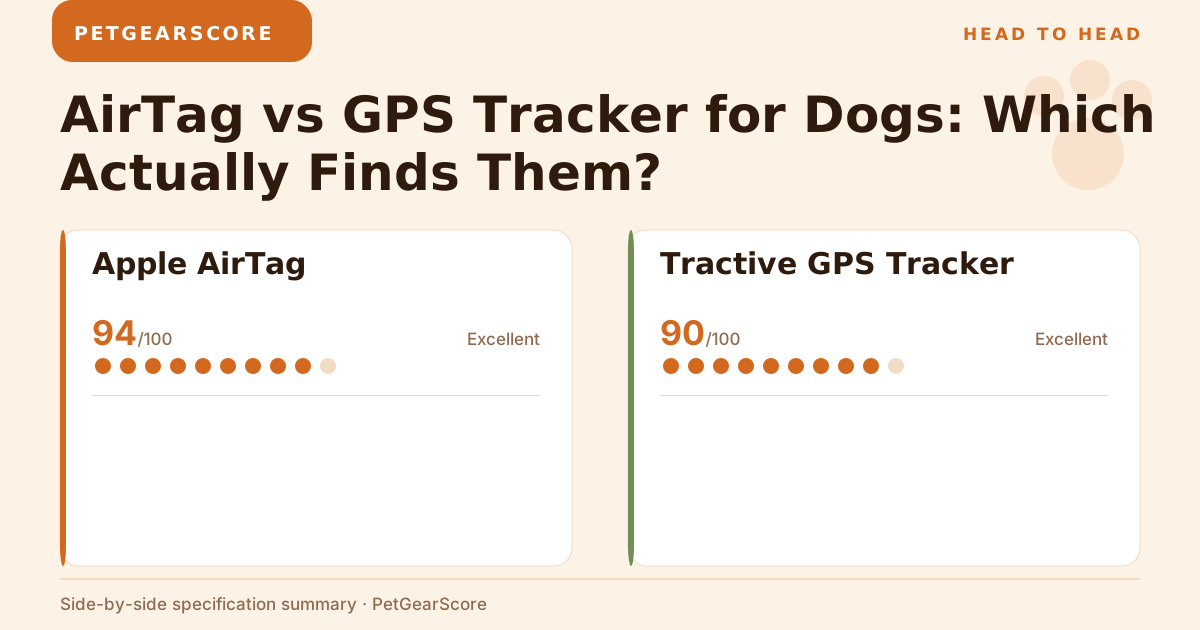
Apple AirTag — 94/100 (Excellent)
███████████████████░
Tractive GPS Tracker — 90/100 (Excellent)
██████████████████░░
Whistle GO Explore — 85/100 (Excellent)
█████████████████░░░
Scores are calculated from publicly available specs including reliability, connectivity, ease of use, durability, and value. Learn about our methodology.
Understanding GPS Trackers for Dogs
Real GPS trackers use cellular networks to tell you exactly where your dog is, right now. Think of them as tiny smartphones that your dog wears.
Key Features of GPS Trackers
- Real-Time Tracking: See your dog’s location live on your phone, updated every few seconds
- Geofencing: Set up invisible boundaries around your yard or neighborhood and get alerts when your dog crosses them
- Activity Monitoring: Track steps, calories, and exercise time (some models)
Popular GPS Trackers
-
Whistle GO Explore — discontinued
- Status: Tractive acquired Whistle from Mars Petcare in July 2025 and the trackers were switched off; the details are in our Tractive vs Whistle explainer
- Battery Life: Up to 20 days
- Range: Unlimited (cellular-based)
- Pros: Real-time tracking, health monitoring, waterproof design
- Cons: No longer functions — listed here for reference only
-
- Battery Life: 2-5 days
- Range: Unlimited (cellular-based)
- Price tier: Budget
- Pros: Live tracking, geofencing, affordable subscription
- Cons: Shorter battery life, requires a subscription
Understanding Apple AirTags
AirTags were made to help you find your keys, not track your dog. But people use them for pets anyway because they’re cheap, simple, and light enough that even cat owners weigh them against purpose-built ultralight cat trackers.
Key Features of AirTags
- Bluetooth Tracking: Connect to nearby iPhones to share location data — Apple’s AirTag page describes the Find My network as more than a billion devices relaying anonymous, encrypted pings
- Precision Finding: Ultra Wideband directions to the AirTag (if you have a newer iPhone)
- Affordable: Way cheaper than GPS trackers upfront
Limitations of AirTags
- Range: Only work within 30 feet via Bluetooth. Beyond that, you’re hoping other iPhone users walk near your lost dog
- No Real-Time Tracking: You get occasional location pings, not live updates
Comparison Table: GPS Trackers vs. AirTags
| Feature | Whistle GO Explore | Tractive GPS Tracker | Apple AirTag |
|---|---|---|---|
| Real-Time Tracking | Yes | Yes | No |
| Geofencing | Yes | Yes | No |
| Activity Monitoring | Yes | No | No |
| Battery Life | Up to 20 days | 2-5 days | 1 year (replaceable) |
| Range | Unlimited | Unlimited | Bluetooth (30 ft) |
| Price Tier | Mid-range | Budget | Budget |
| Subscription Required | Yes | Yes | No |
Practical Tips for Choosing the Right Option
- Active or escape-artist dogs need GPS trackers - If your dog bolts or you hike off-leash, real-time tracking is essential
- Budget-conscious? AirTags work as backup - They won’t actively track your dog, but they might help you find them if they get lost. Our Fi Collar versus AirTag breakdown shows exactly where that gamble falls apart
- iPhone users get the most from AirTags - They integrate perfectly with your phone, though GPS trackers work with any smartphone
- Check your cell coverage - GPS trackers need good cellular service, especially in rural areas
FAQ
1. Can I use an AirTag for my dog?
You can attach one to their collar, but don’t expect it to actually track them. It’s more like leaving breadcrumbs - you might get lucky and find them if other iPhone users happen to walk by.
2. Do GPS trackers require a subscription?
Yep, most charge a monthly fee for the cellular service. That’s the trade-off for real tracking capability, though we’ve ranked the cheapest monthly plans available if you want to keep that number down.
3. How accurate are GPS trackers for dogs?
Pretty good - usually within 5-10 feet. Sometimes better in open areas, sometimes worse near tall buildings. Tractive’s DOG 6 spec page puts LIVE mode updates at every 2–3 seconds, which matters more in a chase than raw accuracy does.
4. How long do the batteries last on GPS trackers?
Depends on the model. Whistle’s last up to 20 days, but Tractive’s die after 2-5 days. More tracking = faster battery drain.
5. Is an AirTag waterproof?
Water-resistant, not waterproof. Apple rates it IP67 under IEC standard 60529 — a metre of water for up to 30 minutes — so it’s fine for rain, but a protective case is sensible if your dog loves swimming. Whatever you clip to the collar, keep the microchip registration current too: the AVMA’s microchipping FAQ found microchipped dogs went home 52.2% of the time versus 21.9% without.
Bottom Line
If your dog stays close to home and you just want cheap peace of mind, an AirTag works. But if you actually need to track your dog - because they wander, escape, or you take them on adventures - spend the money on a real GPS tracker. The Tractive is decent value on hardware, though the subscription adds up. The Whistle costs more upfront but lasts longer between charges. Got a toy breed? Check our picks for trackers a small dog can actually carry before you commit to either.